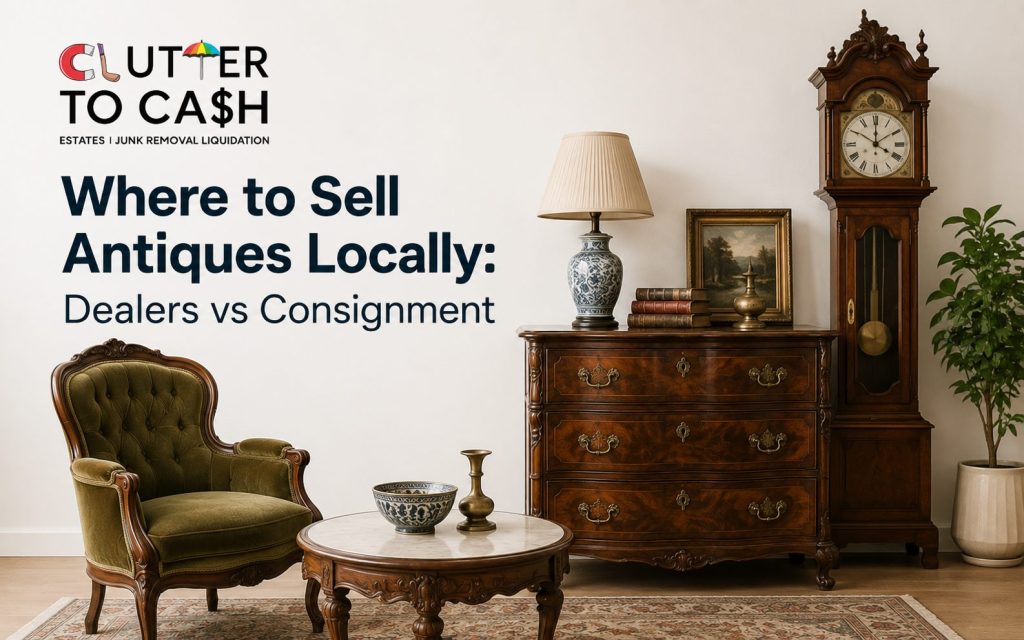
Where to Sell Antiques Locally: Dealers vs Consignment
Where to Sell Antiques Locally
Anyone selling furniture in Vancouver eventually asks where to sell antiques locally for the best possible return. Unlike everyday household items, much of an antique’s value comes down to age, craftsmanship, rarity, and overall condition. Clutter to Cash runs furniture consignment across the city at https://trycluttertocash.com/services/furniture-consignment-vancouver for sellers who want their antiques in front of buyers who actually appreciate them, and knowing which selling method fits your piece can make a real difference to the final price.
Find Out What Your Antique Is Worth
Get familiar with the piece before reaching out to any buyer. Original labels, maker’s marks, hand carved details, and provenance all factor into value.
Worth noting includes estimated age, type of wood or material, original finish, any previous restorations, overall condition, and provenance if you have it. Check recently completed sales rather than asking prices, since sold prices give a far more realistic sense of current value and help you judge whether an offer is fair.
Selling to Antique Dealers
Local antique dealers are usually the fastest route to a sale. Experienced dealers know the market well enough to assess construction quality and rarity quickly, which lets them make an offer on the spot.
This works well for sellers who need payment right away, are handling an estate, prefer a simple transaction, or would rather avoid managing listings and negotiations themselves. Keep in mind a dealer is buying to resell, so the offer will typically come in below retail value.
Using Furniture Consignment
Consignment tends to pay better when time isn’t the priority. Instead of buying the piece outright, a consignment service showcases and markets it to buyers actively looking for quality vintage and antique furniture.
At Clutter to Cash, the consignment manager evaluates each antique in person, weighing age, condition, and current demand before agreeing to take it on, and the split runs fifty fifty once it sells. This route tends to suit antique dining tables, Victorian furniture, solid wood cabinets, decorative antique pieces, and collectible furniture from recognized makers particularly well. The commission comes off the top, but the higher sale price consignment tends to bring usually more than makes up for it.
Consider an Antique Auction
Rare or highly collectible antiques sometimes do better at auction, where competitive bidding can push the price well above a standard asking price. This tends to suit pieces tied to a specific era or designer, or ones that are simply one of a kind. Check auction fees ahead of time, since commissions can take a meaningful bite out of the final return.
Prepare Your Furniture Before Selling
Presentation matters no matter which route you choose.
Clean gently without stripping the original finish, photograph the piece from multiple angles, document any labels, stamps, or signatures, and record dimensions and condition accurately. Good documentation attracts serious buyers and heads off a lot of unnecessary questions from people who were never going to buy anyway.
Final Thoughts
Selling antiques well comes down to knowing what a piece is worth and matching it to the right selling method. Dealers offer speed, auctions suit rare or highly sought pieces, and consignment gives finer antiques a chance to reach buyers who value them properly. Research the piece honestly, disclose its condition, and choose the route that fits what you’re actually trying to get out of the sale.